Part of the Hokuriku Shinkansen Stopover Series
Fukui Station: Dinosaurs at the Platform
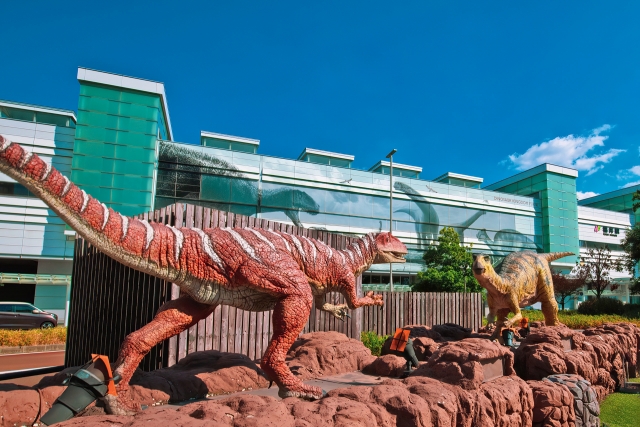
Fukui Station does not whisper.
It greets you with dinosaurs.
Life-size models.
Moving figures.
Roaring sound effects in front of a regional station.
It feels unexpected — almost bold for a small city.
There is a reason.
Fukui Prefecture is one of Japan’s most important dinosaur excavation sites and home to the renowned Fukui Prefectural Dinosaur Museum.
You do not need to travel all the way to the museum to feel that identity.
The station itself makes the statement.
If you have three hours between trains, this is enough to begin.
A Castle Without a Castle
Walk about five minutes from the station and you reach the remains of Fukui Castle Ruins.
And here is the surprise:
There is no castle.
No reconstructed tower.
No dramatic samurai spectacle.
Instead, inside the old moat, stands the prefectural government building.
For some visitors, this feels disappointing.
For others, it is fascinating.
The former military and political center of a feudal domain is now a modern administrative office.
History was not frozen here.
It was reused.
This is not unique to Fukui.
A similar story can be seen at Sunpu Castle in Shizuoka.
But in Fukui, the contrast feels particularly direct.
Stone walls from the Edo period.
A 20th-century government building behind them.
Japan is often presented as carefully preserved tradition.
Here, you see something different — practical continuity.
Quiet Beauty at Yokokan Garden
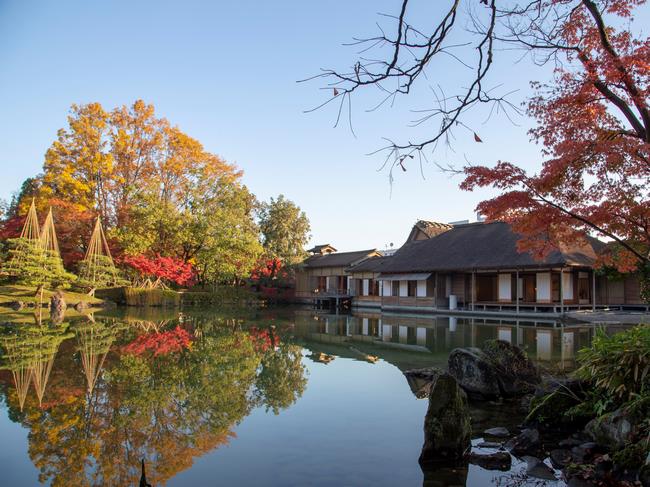
If you want elegance, walk a little further to Yokokan Garden.
This former villa garden of the Matsudaira lords is calm, balanced, and understated.
A pond reflects low wooden buildings.
The sky feels wide.
The space is intimate rather than grand.
There are no crowds like Kyoto.
No endless lines for photos.
You sit.
You observe.
You listen to water.
English explanations may be limited, but the garden does not require translation.
It is proportion, silence, and light.
For many travelers, this becomes the most memorable part of Fukui.
A Small Museum That Explains the Region
Next to the garden is the Fukui City History Museum.
It is not large.
It is not flashy.
But if you want context — how Fukui functioned as a castle town, how it rebuilt after wartime destruction — this museum provides it.
English support may be partial, so it is wise to check in advance.
Even without full translation, artifacts and layout tell a story of resilience rather than spectacle.
Finish with Echizen Soba
Return toward the station and eat.
Fukui is known for Echizen soba — darker buckwheat noodles with a stronger flavor, often served with grated daikon radish.
It is simple.
It is regional.
It does not try to impress.
You may also find soba-making experiences near the station, though availability should be confirmed beforehand.
Three hours is enough for one bowl, one garden, one walk around a moat.
That is sufficient.
Why Fukui Is Worth Missing One Train
Fukui will not overwhelm you.
It does not compete with Kyoto’s temples or Tokyo’s scale.
Instead, it offers something quieter:
• A station proud of prehistoric identity
• A castle site transformed into government space
• A restrained feudal garden
• Honest regional food
This is not dramatic Japan.
It is lived-in Japan.
If you are traveling on the Hokuriku Shinkansen, consider stepping off for three hours.
You may not find spectacle.
You may find something more revealing.
Sometimes, understanding a country happens not in its capitals —
but in the spaces that kept going without becoming famous.
Miss one train.
Walk outside.
Look carefully.
That is enough.
Traveling west?
Before or after Fukui, consider stopping at Tsuruga Station.
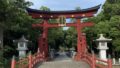
Just ten minutes from the platform stands the grand torii of Kehi Shrine — bearing both the Tokugawa hollyhock crest and the paulownia symbol of imperial authority.
It is another quiet layer of history waiting between trains.
Read more here:
Kehi Shrine in Tsuruga: Miss One Train and Discover Hidden Japanese History
💡 Best Way to Save: The “Have Fun in Fukui Pass” If you are staying in Fukui for a few days, this 1-week pass is a must-have. It covers entrance fees for major spots like Eiheiji Temple, local train rides (Echizen Railway), and even food vouchers for local delicacies. It’s incredibly reasonable and makes your journey much smoother. 👉 Get your Have Fun in Fukui Pass on Klook

コメント