If you’re travelling between Kanazawa and Kyoto, there’s a good chance you’ll pass through Fukui without giving it much thought.
Most visitors simply continue on to their next destination.
But if you have a little time to spare, there’s one place in Fukui worth stepping off the usual tourist route for.
Near Lake Suigetsu, in the quiet countryside of the Wakasa region, you can see something remarkable: a record of roughly 70,000 years of Earth’s history, preserved layer by layer beneath the bottom of a lake.
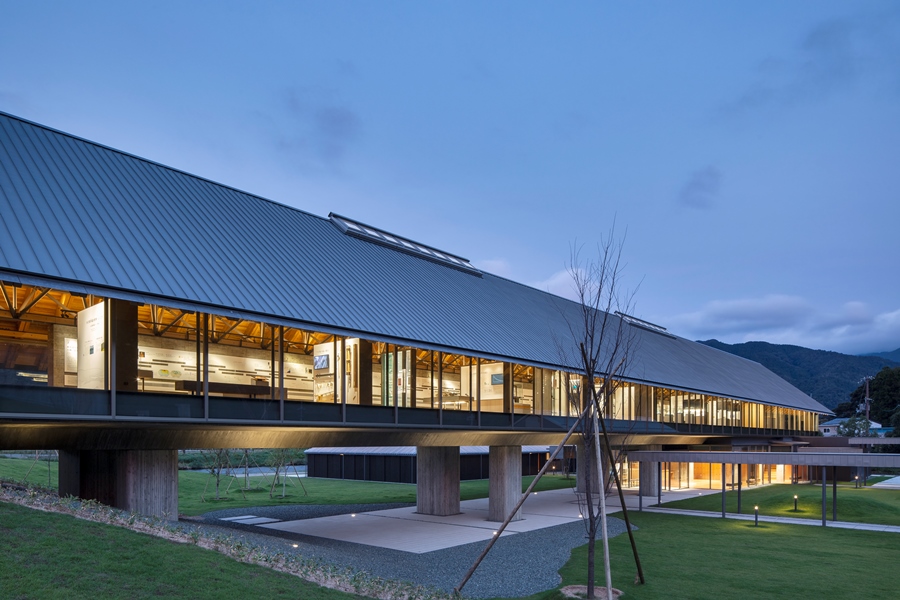
The place is the Fukui Prefectural Varve Museum.
It isn’t a famous tourist attraction. You won’t find crowds of people lining up outside, and it doesn’t have the familiar appeal of a castle or temple.
What it has is something much rarer.
A lake that remembers 70,000 years
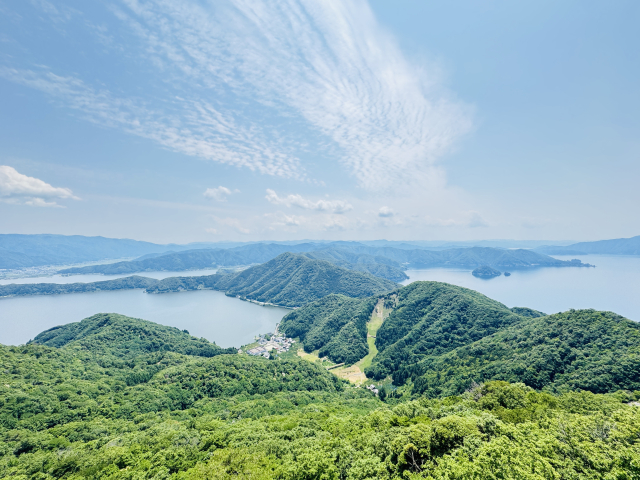
Lake Suigetsu looks peaceful enough today. It is one of the lakes that make up the scenic Mikata Five Lakes area in Fukui Prefecture.
But beneath its surface lies an extraordinary archive of the past.
For thousands of years, tiny layers of sediment accumulated on the lake floor. These annual layers are known as varves. Because the conditions at Lake Suigetsu were unusually well suited to preserving them, the layers remained remarkably undisturbed.
The result is a nearly continuous record stretching back around 70,000 years.
Scientists have studied these sediments to better understand the past and to help improve the calibration of radiocarbon dating. Research based on Lake Suigetsu’s record has played an important role in building the international radiocarbon calibration curve used by researchers around the world.
That may sound abstract when you’re reading about it.
It becomes much easier to appreciate when you’re standing in front of it.
Walk 45 metres. Travel back 70,000 years.
The centrepiece of the Fukui Prefectural Varve Museum is a 45-metre-long display of sediment cores taken from Lake Suigetsu.
The layers are illuminated from behind, revealing subtle bands of light and dark sediment stretching along the wall.
From a distance, it almost looks like stained glass.
Up close, you begin to realise what you’re looking at.
Each section represents a different moment in Earth’s past.
Walking along the display feels a little like moving backwards through time. The layers take you through the last Ice Age and into a world that existed long before modern cities, countries, or even written history.
It’s one of those places where science suddenly becomes physical.
You aren’t just reading about 70,000 years.
You’re standing in front of it.
A very different side of Japan
Japan’s most famous destinations are easy to understand.
Kyoto offers temples and traditional streets. Kanazawa is known for gardens, samurai districts, and craftsmanship.
The Fukui Prefectural Varve Museum offers something completely different.
There are no historic buildings to photograph and no famous shopping streets nearby.
Instead, there is a quiet museum beside one of Japan’s most interesting lakes.
For travellers who enjoy science, archaeology, natural history, or simply finding places that don’t appear on every standard Japan itinerary, that is exactly what makes it interesting.
The surrounding area is quiet. The landscape feels rural rather than tourist-oriented.
And after spending time in Kyoto, Osaka, Tokyo, or Kanazawa, that change of pace can be refreshing.
How to get there by public transport
The museum can be visited without renting a car, although planning ahead is important.
The nearest railway station is Mikata Station on the JR Obama Line.
From Tsuruga, take the JR Obama Line to Mikata. From Mikata Station, the museum is a short taxi ride away.
Depending on your plans, walking or using other local transport options may also be possible, but a taxi is generally the easiest choice—especially if you’re carrying luggage.
One thing to remember is that the JR Obama Line is a local railway with relatively limited services compared with Japan’s major urban routes.
Check the timetable before travelling and allow plenty of time for connections.
This is rural Japan, and that’s part of the experience.
A worthwhile stop between major destinations
Fukui is often treated as somewhere travellers pass through.
But places like Lake Suigetsu are a reminder that some of Japan’s most interesting stories are found away from the country’s best-known tourist routes.
You can spend the morning in a major city, board a train, and a few hours later find yourself looking at a scientific record that reaches back tens of thousands of years.
That contrast is what makes this part of Japan interesting.
The Fukui Prefectural Varve Museum may not be the biggest museum you’ll visit in Japan.
It may not be the most famous, either.
But standing in front of 45 metres of illuminated sediment—each layer representing a fragment of the past—gives you a different sense of scale.
For a moment, modern Japan disappears.
And all that’s left is time.
Before You Go
Fukui Prefectural Varve Museum
📍 Location: Wakasa, Fukui Prefecture
🚆 Nearest Station: Mikata Station (JR Obama Line)
🚕 From the station: A short taxi ride
⏰ Travel tip: Check JR Obama Line schedules in advance, as services are less frequent than on major railway routes.
🎒 Best for: Science lovers, history enthusiasts, curious travellers, and anyone looking for something beyond Japan’s standard tourist itinerary.
Before travelling, always check the museum’s latest opening hours, admission information, and transport schedules.
🕰 水月湖と7万年の時間
「世界の時間」を支える福井の湖へ|水月湖と年縞博物館を訪ねて
水月湖に7万年分積み重なる「年縞」と、45mの実物展示が圧巻の年縞博物館。
なぜ福井の小さな湖が、世界の年代測定に使われる「時間のものさし」になったのかを訪ねました。▶ Lake Suigetsu: The World’s Standard for Time — 70,000 Years of Earth’s History in Fukui

コメント